Quick Answer
Waterproofing is most effective when it’s planned before visible damage appears. By identifying where moisture is entering your home and choosing a solution designed for that specific problem, you can prevent costly repairs, extend the life of painted surfaces and protect your property from long-term structural damage.
Successful waterproofing isn’t about finding one product that does everything. It’s about using the right preparation, repair and waterproofing system for the job.
Damp Starts with Moisture
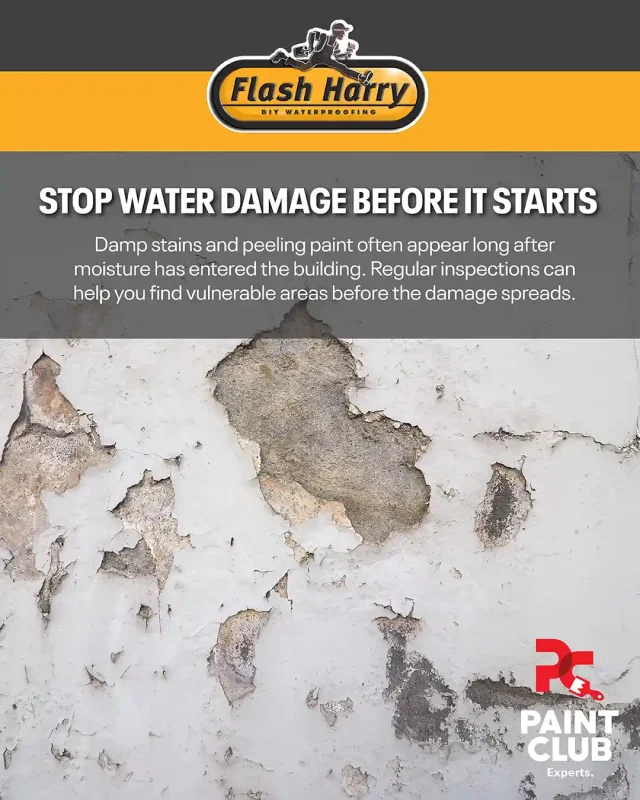
There’s a familiar pattern many homeowners follow. A small brown stain appears on the ceiling after heavy rain. Paint starts bubbling in a spare bedroom. Plaster begins to crumble beneath a window. Only then does waterproofing move to the top of the to-do list.
By that stage, water has often been finding its way into the building for weeks or even months.
Moisture rarely announces itself immediately. It travels through roof structures, masonry, plaster and concrete long before visible damage appears. What looks like a minor cosmetic issue on the surface may actually be the final stage of a much larger problem developing behind the scenes.
That’s why waterproofing works best as preventative maintenance rather than an emergency repair.
For South African homeowners, this is particularly relevant. Intense summer thunderstorms, winter rainfall in the Western Cape, strong UV exposure and continual expansion and contraction caused by changing temperatures all place pressure on roofs, walls and exterior building materials throughout the year.
Regular inspections, prompt repairs and choosing the correct waterproofing system can help prevent water damage before it becomes expensive to fix.
At authorised Plascon Paint Expert stores, waterproofing advice goes beyond recommending a product from the shelf. Understanding where the moisture is coming from is the first step towards selecting a solution that will last.
Expert Insight
Many waterproofing failures aren’t caused by poor-quality products. They happen because the source of the moisture wasn’t correctly identified, or because the surface wasn’t properly prepared before repairs began.
Why Waterproofing Should Be Planned, Not Postponed
Quick Answer
Waterproofing is far less expensive and disruptive when carried out before moisture causes visible damage. Early intervention protects paint finishes, plaster, roofs and structural components from ongoing deterioration.
Homeowners often think of waterproofing as something you do after a leak appears. In reality, it’s an essential part of routine property maintenance.
Buildings naturally move over time. Roof sheeting expands during hot afternoons and contracts overnight. Masonry absorbs and releases moisture. Flashings, gutters and joints experience continual stress from weather exposure. Small cracks and gaps that seem insignificant today can become pathways for water during the next heavy downpour.
Once moisture enters a building, it doesn’t simply stay where it came in.
Water can travel along rafters, behind plaster, through brickwork and beneath paint films before finally becoming visible somewhere completely different. This is one reason why the source of a leak isn’t always directly above the damp patch you can see.
Treating only the visible damage without addressing the underlying cause often leads to recurring problems.
Preventative waterproofing allows vulnerable areas to be repaired before moisture reaches interior finishes, reducing the likelihood of repeated maintenance and costly remedial work.
Practical Tip
Inspect your home before the rainy season arrives. Pay particular attention to:
- Roof flashings
- Valleys
- Ridge cappings
- Parapet walls
- Roof screws and fixings
- Gutters and downpipes
- Exterior wall cracks
- Previous waterproofing repairs
Small maintenance jobs completed early are usually far easier than repairing water damage after months of exposure.
Where Is the Moisture Coming From?
Quick Answer
Not every damp patch has the same cause. Roof leaks, penetrating damp, rising damp, failed waterproofing and poor surface preparation all require different solutions. Correct diagnosis is the foundation of a successful repair.
One of the biggest mistakes homeowners make is assuming all moisture problems are identical.
They aren’t.
Understanding what’s causing the problem helps you choose the most effective repair instead of applying products that aren’t designed for that particular situation.
Roof Leaks
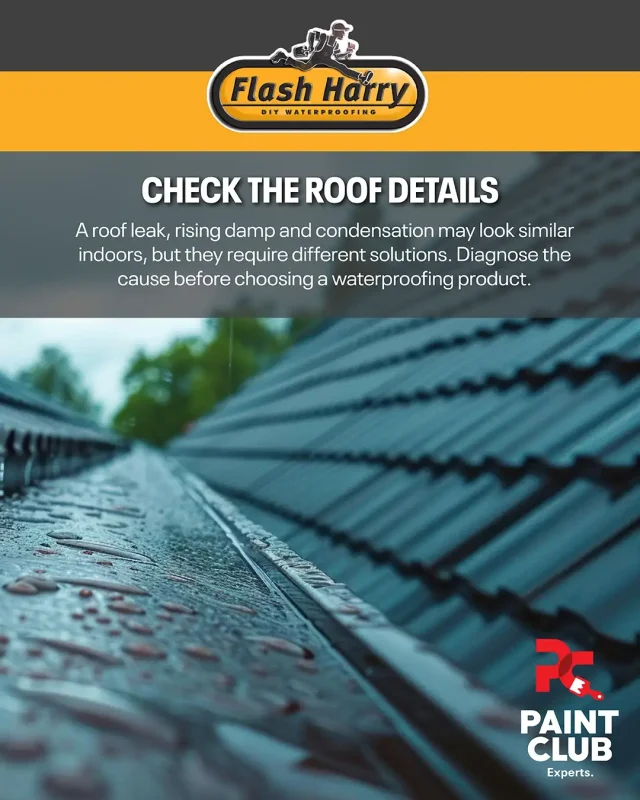
Roof leaks often develop around vulnerable details rather than across the entire roof.
Common entry points include:
- Flashings
- Roof screws
- Ridge cappings
- Valleys
- Lap joints
- Skylights
- Roof penetrations
These areas experience continual movement as roofing materials expand and contract with changing temperatures.
A waterproofing system used on roofs needs enough flexibility to move with the structure while maintaining a continuous waterproof barrier.
Penetrating Damp
Penetrating damp occurs when rainwater enters through defects in exterior walls.
Possible causes include:
- Cracked render or plaster
- Failed waterproof coatings
- Defective joints
- Cracked masonry
- Poorly sealed openings around windows and doors
Unlike rising damp, penetrating damp can appear almost anywhere on a wall, often becoming more noticeable after periods of heavy rainfall.
Rising Damp
Rising damp occurs when groundwater moves upward through masonry by capillary action.
It often appears near the base of interior walls and may be accompanied by:
- Flaking paint
- Damp skirting boards
- White powdery salt deposits
- Crumbling plaster
Treating rising damp usually requires a different approach from repairing roof leaks or waterproofing external walls.
Have a look at this great step by step video on how to treat rising damp using Flash Harry Damp Doctor Injector System and a cementitious waterproofing coat with Polyveld membrane and Slurry Seal: Watch Video
Condensation
Not every damp patch is caused by water entering the building.
Poor ventilation can allow moisture in the air to condense on cooler surfaces, particularly in bathrooms, kitchens and bedrooms during winter.
Condensation problems are generally resolved by improving airflow rather than applying waterproof coatings.
See the following link for drip prevention created by condensation on metal roofs: Flash Harry
Common Mistake
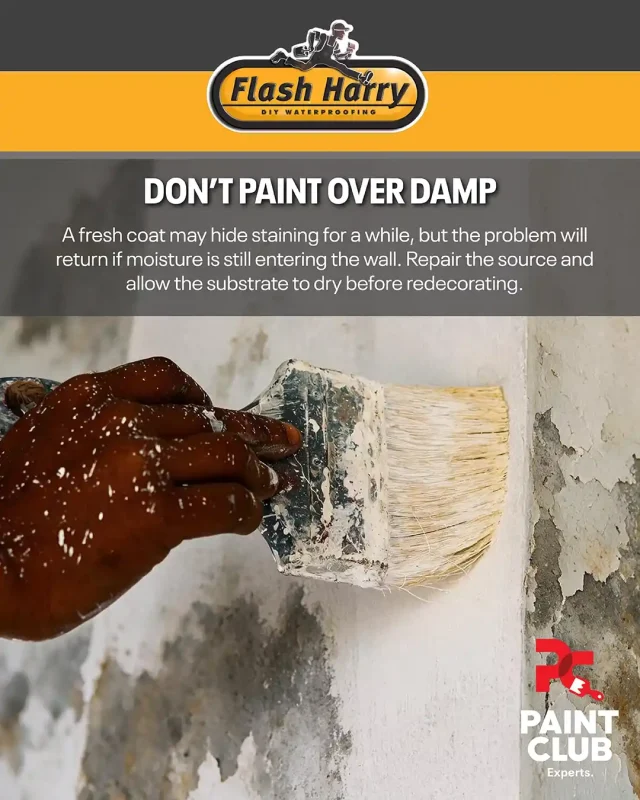
Many homeowners immediately repaint a damp wall.
Fresh paint may temporarily hide the marks, but if moisture continues entering the substrate, bubbling, peeling and staining usually return.
The source of the moisture should always be identified before decorative repairs begin.
Why Surface Preparation Matters More Than Most People Realise
Quick Answer
Even the best waterproofing system depends on proper adhesion. If plaster, repair mortar or coatings can’t bond securely to the substrate beneath them, the repair may fail long before the waterproofing product reaches the end of its expected service life.
When people think about waterproofing, they naturally focus on the final protective coating.
Professionals know that success usually starts much earlier.
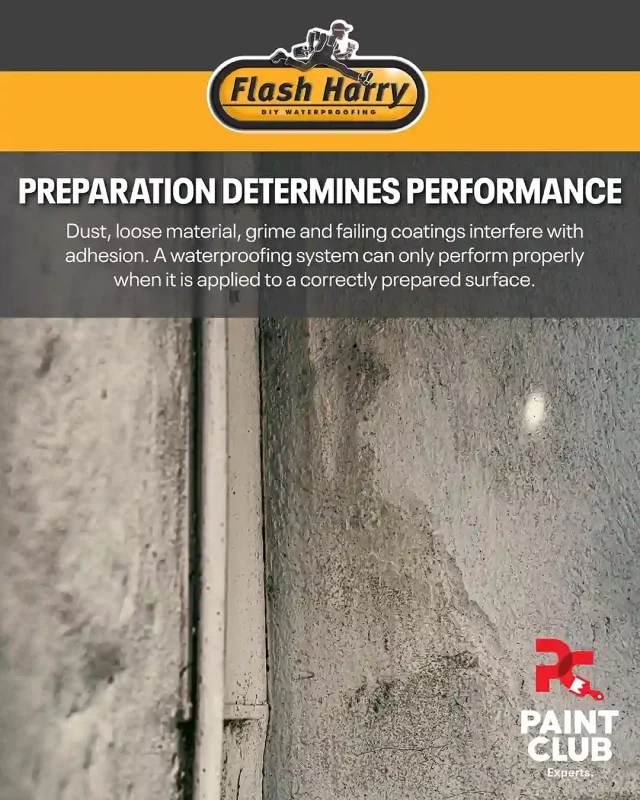
Loose material, dusty surfaces, smooth concrete, painted walls and weak plaster can all reduce adhesion, making it difficult for new plaster, repair compounds or coatings to form a durable bond.
Surface preparation creates the foundation that allows subsequent repair products to perform as intended.
Preparing Difficult Surfaces with Flash Harry Bond & Key
Flash Harry Bond & Key is designed as a high-performance, water-based bonding liquid that can also be used as an admixture in cementitious products, making it a versatile preparation product for repair work both inside and outside the home.
As a surface treatment, it improves the adhesion of cement and gypsum plasters to a wide variety of substrates, including smooth impervious surfaces, face brick, plasterboard, painted surfaces and cement-based substrates. It can also improve the adhesion and coverage of acrylic water-based paints when used as part of a suitable preparation system.
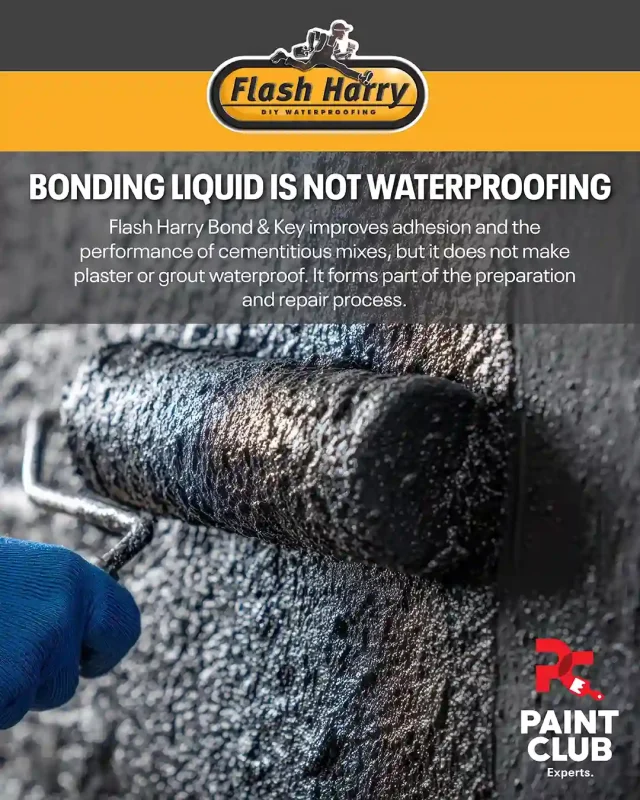
Bond & Key can also be incorporated into plaster, cement mixes, tile grouts and tile adhesives as a partial water replacement, helping improve adhesion, cohesive strength, flexibility and water resistance within the mix itself.
It’s important to understand its role within a repair system.
Bond & Key is not a standalone waterproofing coating. Instead, it prepares the surface and strengthens cementitious mixes so that subsequent repair and waterproofing products have the best possible foundation to perform properly.
Download the Flash Harry Bond & Key Technical Data Sheet
Expert Insight
Professional waterproofing contractors often spend as much time preparing a surface as they do applying the waterproofing product itself. Proper preparation improves adhesion, reduces the risk of premature failure and gives the entire repair system the best chance of delivering long-lasting protection.
Choosing the Right Waterproofing System for the Job
Quick Answer
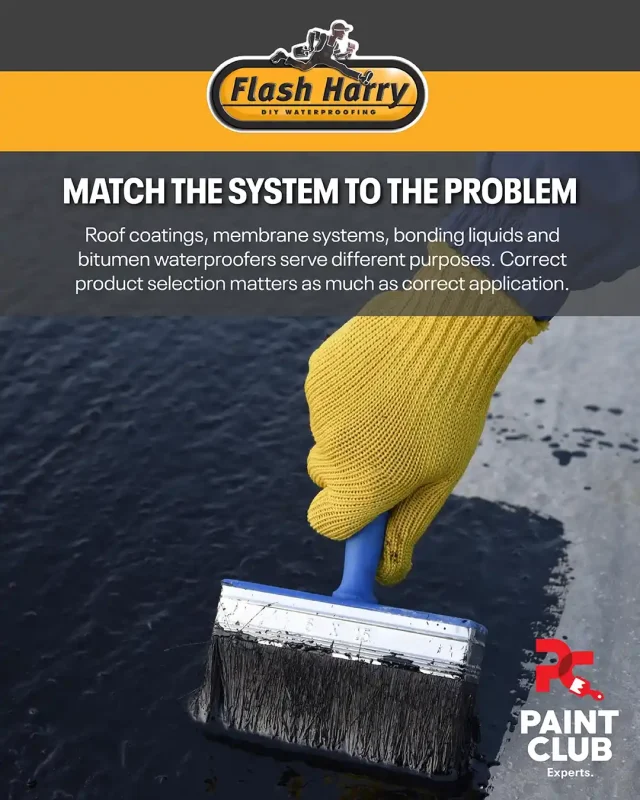
There isn’t a single waterproofing product that solves every moisture problem. The best results come from matching the waterproofing system to the type of surface, the source of the water and the amount of movement the area experiences.
A leaking roof detail, a cracked parapet wall and a damp retaining wall may all involve water, but they behave very differently. Choosing a product designed for the specific application gives the repair a far better chance of lasting for years rather than months.
Flexible Waterproofing for Roofs and Exterior Details
Roofs are constantly moving.
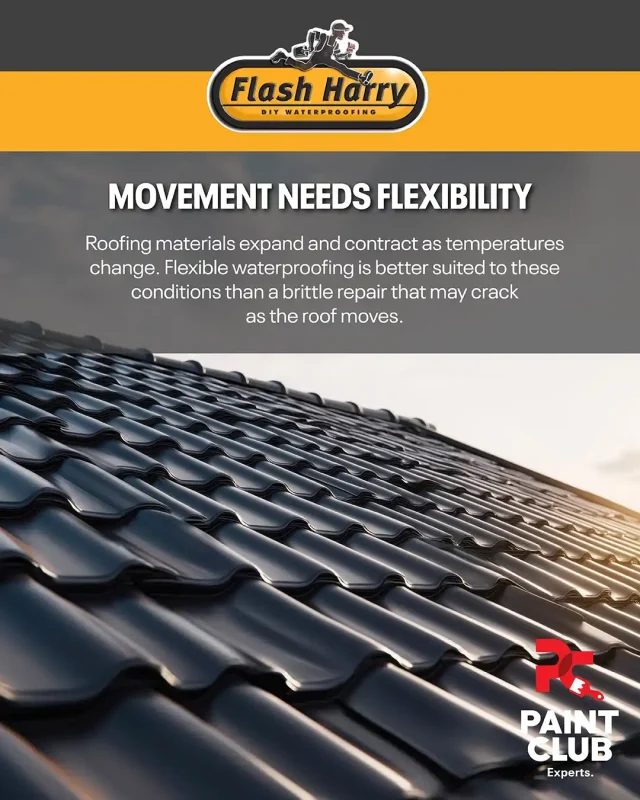
Every sunny day causes roofing materials to expand. As temperatures drop overnight, they contract again. This cycle repeats thousands of times over the life of a building. Add strong UV exposure, heavy rain and wind-driven weather, and it’s easy to understand why roofs are one of the most demanding environments for any waterproofing system.
Rigid coatings struggle to cope with this continual movement. Over time, they can crack, allowing moisture to find its way back into the building.
This is where flexible waterproofing systems offer a significant advantage.
When to Choose Flash Harry Liquid Plastic Plus+
Quick Answer
Flash Harry Liquid Plastic Plus+ is designed for waterproofing areas that experience movement and weather exposure. Its fibre-reinforced elastomeric formulation creates a seamless waterproof barrier without requiring a reinforcing membrane in many common waterproofing applications.
Rather than relying on a separate membrane embedded between coats, Liquid Plastic Plus+ contains reinforcing fibres within the coating itself. Once cured, it forms a continuous waterproof layer that can move with the substrate while maintaining protection.
This makes application simpler while still delivering a robust waterproofing system for many residential maintenance projects.
Typical applications include:
- Fibre cement roofing
- Roof tiles
- Concrete roofs
- Parapet walls
- Flashings
- Roof ridges
- Gutters
- Downpipes
- Roof screws
- Exterior detailing around roof penetrations
Because the coating dries to form a seamless barrier, there are no overlapping membrane joints that could become weak points if incorrectly installed.
Why flexibility matters
One of the biggest causes of waterproofing failure is movement.
Roofs rarely remain completely static. Small amounts of expansion, contraction and vibration occur throughout the year.
A flexible elastomeric coating is able to accommodate this movement far more effectively than rigid cement-based repairs or brittle coatings that may crack over time.
That flexibility helps maintain the waterproof seal while protecting vulnerable roof details from ongoing weather exposure.
Best Practice
Always clean the surface thoroughly before waterproofing.
Dust, chalking paint, loose material, algae and dirt reduce adhesion and can shorten the life of any waterproofing system, regardless of how advanced the product may be.
It is also important to mechanically remove any rust present on the roof in order to ensure longevity of the application and the substrate.
Download the Flash Harry Liquid Plastic Plus+ Technical Data Sheet
When Traditional Waterproofing Membranes Are the Better Choice
Quick Answer
Although newer fibre-reinforced coatings have simplified many waterproofing applications, reinforced membrane systems remain an excellent solution for certain repairs where additional reinforcement is beneficial.
There is sometimes a misconception that newer technologies have replaced waterproofing membranes altogether.
In reality, both systems have an important place in professional waterproofing.
Some repairs benefit from the added reinforcement provided by a waterproofing membrane, particularly where joints, cracks or roof details require additional bridging capability.
For applications where significant movement is expected, additional reinforcement may be required. In hot climates, for example, a zinc or metal roof can reach temperatures exceeding 80°C, resulting in substantial thermal expansion and contraction.
This becomes particularly important at junctions between different substrates, such as where a zinc roof meets a concrete wall. Because metal and concrete expand and contract at different rates, considerable stress can develop along the junction. In these areas, a reinforcing membrane should always be used to help accommodate and bridge the movement.
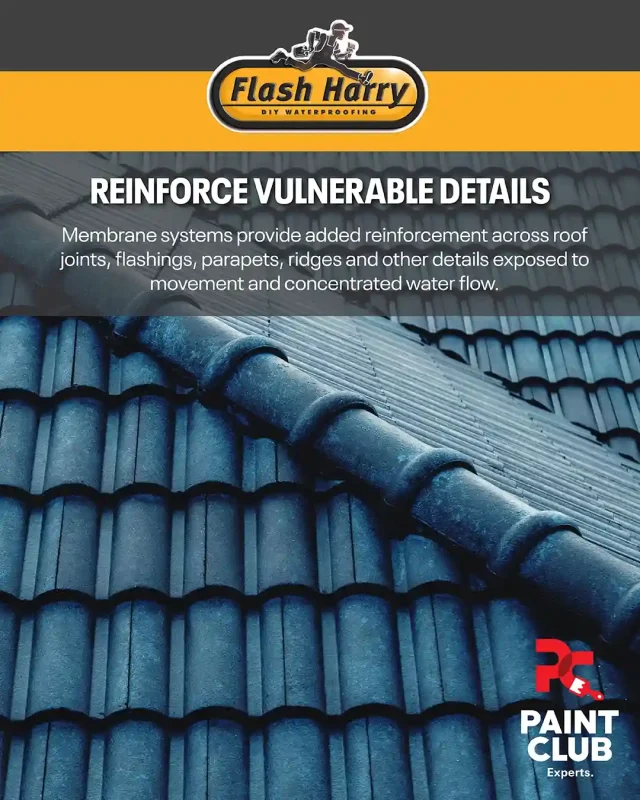
For this type of high-movement detail, a membrane-reinforced system such as One Shot or Liquid Plastic with the appropriate membrane is preferable to a fibre-reinforced system such as Liquid Plastic Plus.
When to Choose Flash Harry One Shot Kit
Flash Harry One Shot Kit combines waterproofing compound and reinforcing membrane into a complete repair system, making it convenient for homeowners tackling common maintenance projects especially when dealing with a pitched concrete or metal roof:
It is particularly well suited to areas such as:
- Roof flashings
- Ridge cappings
- Roof screw repairs
- Valleys
- Roof joints
- Small roof cracks
- Gutters
- Downpipes
- Parapet walls
Because the membrane becomes fully encapsulated within the waterproof coating, the system provides additional reinforcement across vulnerable joints and repair areas.
For homeowners carrying out occasional maintenance, the convenience of having all the required components packaged together also simplifies product selection.
Expert Insight
No waterproofing product can compensate for structural movement caused by unstable substrates or ongoing building defects.
If cracks continue to widen or structural movement is visible, the underlying cause should be investigated before waterproofing begins.
Practical Example
Imagine a roof valley where two roof slopes meet.
Large volumes of rainwater are concentrated into this narrow channel during every storm. The waterproofing system in this area experiences far greater stress than the surrounding roof.
A reinforced membrane system can provide valuable additional strength across these high-demand details.
Download the Flash Harry One Shot Kit Technical Data Sheet
Protecting Foundations and Below-Ground Structures
Quick Answer
Some waterproofing applications require resistance to constant soil moisture rather than direct rainfall. These situations call for products specifically formulated for below-ground protection.
Not all waterproofing takes place on roofs.
Retaining walls, foundations, planter boxes and below-ground masonry remain in continual contact with damp soil.
These structures experience a completely different moisture environment from exposed roofs or exterior walls.
Instead of shedding rainwater, they need protection against moisture that remains present for extended periods.
When to Choose Flash Harry Drip Stop
Flash Harry Drip Stop is a rubberised bitumen waterproofing coating designed for applications where durable moisture protection is required.
Typical uses include:
- Retaining walls
- Foundations
- Concrete structures
- Planter boxes
- Masonry below ground level
- Damp-proofing applications
- Selected roof repairs where appropriate
The rubberised formulation provides flexibility while the bitumen base delivers effective moisture resistance in demanding environments.
Because below-ground waterproofing is often hidden once construction is complete, selecting an appropriate system during the repair stage becomes especially important.
Practical Tip
If you’re waterproofing a retaining wall before backfilling with soil, it’s worth spending the extra time ensuring complete coverage.
Once the wall has been backfilled, future repairs become significantly more difficult and expensive.
Download the Flash Harry Drip Stop Technical Data Sheet
Building a Complete Waterproofing System
Quick Answer
Long-lasting waterproofing is usually achieved through a sequence of preparation, repair and protection rather than a single product application.
Experienced contractors rarely think in terms of individual products.
Instead, they think in systems.
A successful repair often follows a logical sequence:
Step 1 – Prepare the substrate
Remove loose material, dust, previous failed coatings and contaminants. Where improved adhesion is required for plaster, cementitious repairs or difficult surfaces, prepare the substrate using a suitable bonding product such as Flash Harry Bond & Key before carrying out repairs.
On metal roofs, it is important to remove all rust from the substrate, as well as remove and replace any rusted screws or washers, before using a rust preventative primer such as Flash Harry RUST STOP.
Step 2 – Repair damaged areas
Repair cracks, defective plaster, failed joints or deteriorated building elements before waterproofing.
Waterproofing should protect a sound substrate, not conceal underlying defects.
In other words, waterproofing should also not be used to fill cracks or holes, repair first then waterproof!
Step 3 – Waterproof appropriately
Select the waterproofing system that matches the area being repaired.
A flexible roof coating, reinforced membrane system or rubberised bitumen coating each serves a different purpose.
Choosing the correct solution is more important than choosing the most expensive one.
Common Waterproofing Mistakes
Even quality products can disappoint if they’re used incorrectly.
Some of the most common mistakes include:
Treating symptoms instead of causes
Painting over bubbling paint may improve the appearance temporarily, but it won’t stop water entering the building.
Skipping surface preparation
Poor adhesion is one of the leading causes of premature coating failure.
Taking shortcuts during preparation often leads to repairs needing to be repeated much sooner than expected.
Using one product everywhere
Different waterproofing challenges require different technologies.
A product designed for below-ground damp-proofing isn’t necessarily the right choice for a moving roof joint, just as a roof coating isn’t intended for every foundation application.
Waiting until extensive damage develops
Small leaks are usually simpler – and far less expensive – to repair than widespread water damage affecting ceilings, plaster and decorative finishes.
Key Takeaway
The most effective waterproofing projects begin long before the first coat is applied.
They start with careful inspection, accurate diagnosis and proper preparation.
When each stage of the repair is matched to the problem – from preparing difficult surfaces with Flash Harry Bond & Key to selecting the appropriate waterproofing solution for roofs, walls or below-ground structures – you create a system designed to deliver reliable, long-term protection rather than a temporary fix.
Practical Tips to Help Prevent Damp and Water Damage
Protecting your home from water damage doesn’t always require major repairs. Regular inspections and small maintenance tasks can prevent many of the problems that eventually lead to costly waterproofing projects.
Tip 1: Inspect your roof twice a year
Make it a habit to inspect your roof before and after the rainy season. Look for loose flashings, cracked ridge cappings, damaged roof screws, blocked valleys and signs of previous waterproofing repairs beginning to deteriorate.
Early intervention often prevents a small repair from becoming a ceiling leak.
Tip 2: Keep gutters and downpipes clear
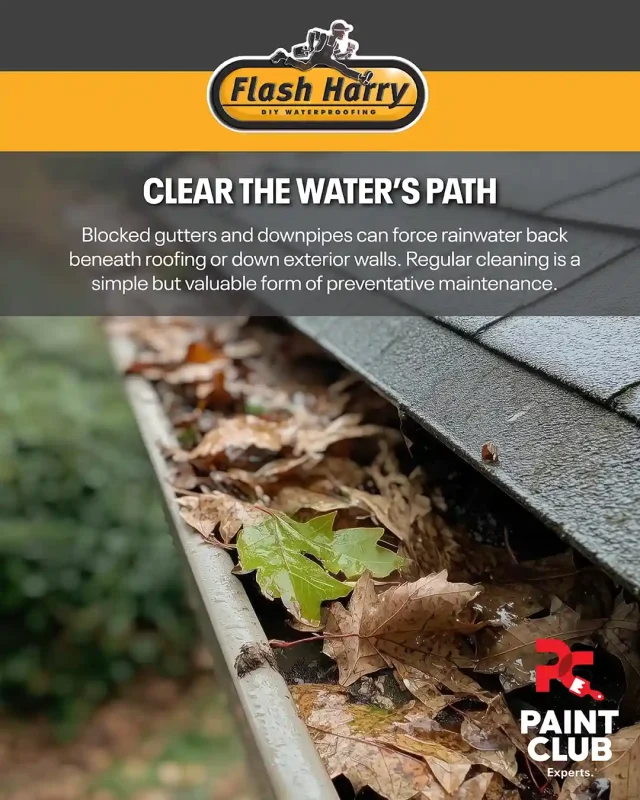
Blocked gutters are one of the most common causes of water damage around homes.
Leaves, dirt and debris prevent rainwater from flowing freely, causing gutters to overflow and water to run down exterior walls or back under roofing materials.
Cleaning gutters regularly helps direct water where it belongs.
Tip 3: Repair small cracks before they grow
Hairline cracks in plaster or around roof details may not seem urgent, but they often provide the first pathway for moisture to enter.
Repairing these areas early is usually simpler and more cost-effective than repairing water-damaged plaster, ceilings and paintwork later.
Tip 4: Don’t ignore peeling paint
Peeling or bubbling paint isn’t always a paint problem.
In many cases, it’s your home’s way of telling you that moisture is trapped beneath the surface. Before repainting, identify and correct the source of the moisture to avoid the problem returning.
Tip 5: Prepare surfaces properly
Successful waterproofing begins long before the first coat is applied.
Clean surfaces thoroughly, remove loose material and ensure repairs are carried out on a sound substrate. Where improved adhesion is required for plaster, cementitious repairs or difficult surfaces, a suitable bonding product such as Flash Harry Bond & Key can help create a stronger foundation for subsequent repairs.
When to Ask a Paint Expert
Some waterproofing projects are straightforward. Others require a little more investigation.
If you’re unsure whether you’re dealing with a roof leak, penetrating damp, rising damp or a surface preparation issue, it’s worth getting expert advice before purchasing products.
Authorised Plascon Paint Expert stores specialise in helping homeowners, DIY enthusiasts and contractors choose the right products for the job. Their experienced teams can recommend an appropriate preparation and waterproofing system based on the type of substrate, the source of the moisture and the area being repaired.
This approach often saves both time and money by ensuring the problem is treated correctly the first time.
Not sure where to start?
Visit your nearest authorised Plascon Paint Expert store for practical advice and help selecting the most suitable Flash Harry waterproofing solution for your project.
Find Your Nearest Plascon Paint Expert Store
Key Takeaways
- Water damage often begins long before stains, peeling paint or damp patches become visible.
- Correctly identifying the source of moisture is the first step towards a successful repair.
- Different waterproofing challenges require different solutions. There is no single product suitable for every application.
- Surface preparation plays a critical role in the long-term success of waterproofing systems.
- Flexible roof coatings, reinforced membrane systems and rubberised bitumen coatings each have specific strengths depending on the application.
- Routine inspections and preventative maintenance can significantly reduce the risk of costly water damage.
- Seeking expert advice before starting repairs can help avoid common waterproofing mistakes and unnecessary expense.
Frequently Asked Questions
- What is the difference between rising damp and penetrating damp?
Rising damp occurs when moisture moves upwards through masonry from the ground. Penetrating damp happens when rainwater enters a building through defects such as cracked plaster, damaged joints or failed waterproofing on exterior walls or roofs.
- Can I simply paint over a damp wall?
No. Painting over a damp wall usually hides the symptoms temporarily without addressing the cause. Unless the source of the moisture is corrected first, bubbling, peeling and staining are likely to return.
- What causes waterproofing systems to fail?
Waterproofing failures are commonly caused by poor surface preparation, incorrect product selection, structural movement, inadequate maintenance or failing to repair the underlying defect before waterproofing.
- Why is surface preparation so important before waterproofing?
Waterproofing systems rely on good adhesion. Dust, loose material, chalking surfaces and poorly prepared substrates reduce adhesion and may shorten the lifespan of the repair.
- When should I use a bonding liquid?
A bonding liquid can improve adhesion when plastering difficult surfaces or when added to suitable cementitious mixes. Flash Harry Bond & Key can be used both as a surface treatment and as an admixture to improve adhesion, flexibility, toughness and water resistance in plaster, cement mixes, tile grouts and tile adhesives. It should not be regarded as a standalone waterproofing product.
- Can one waterproofing product solve every moisture problem?
No.
Roof waterproofing, retaining walls, parapet walls, gutters and below-ground structures all experience different conditions. Choosing a waterproofing system designed for the specific application generally delivers better long-term performance.
- How often should I inspect my roof?
As a general guide, inspect your roof at least twice a year and after severe storms. Regular inspections help identify loose flashings, blocked gutters and damaged waterproofing before significant leaks develop.
- What’s the difference between a flexible waterproof coating and a membrane system?
Flexible waterproof coatings create a seamless protective layer over the substrate, while membrane systems incorporate reinforcing fabric within the waterproofing system. Both have important roles depending on the application and the amount of movement expected.
- Can waterproofing stop structural movement?
No.
Waterproofing products are designed to manage moisture, not correct structural defects. If cracks continue to widen or movement is ongoing, the underlying structural issue should be investigated before waterproofing.
- Where can I get advice on choosing the right waterproofing system?
Your nearest authorised Plascon Paint Expert store can help assess your project and recommend a suitable preparation and waterproofing solution based on the type of repair you’re undertaking.
Disclaimer
This article is intended as a general guide for homeowners and DIY enthusiasts. Every building and waterproofing project is different, and product selection should always be based on the substrate, application and manufacturer’s recommendations.
Always read and follow the latest Technical Data Sheet and product instructions before use.
Product performance depends on correct surface preparation, application methods, environmental conditions and ongoing maintenance.
For technical advice specific to your project, consult your nearest authorised Plascon Paint Expert store.