

|
Getting your Trinity Audio player ready...
|
Waterproofing is rarely top of mind, until a ceiling stains, paint bubbles, or water starts dripping onto a freshly renovated floor.
Across South Africa, from wind-driven coastal rain in KZN to summer Highveld cloudbursts and Cape winter storms, most waterproofing failures don’t happen because “the wrong product” was bought. They happen because:
- Movement wasn’t accounted for
- Membranes weren’t properly saturated
- Surfaces weren’t primed
- Incompatible systems were layered together
At Paint Expert level, waterproofing isn’t about selling a bucket. It’s about diagnosing the failure correctly and specifying the right system.
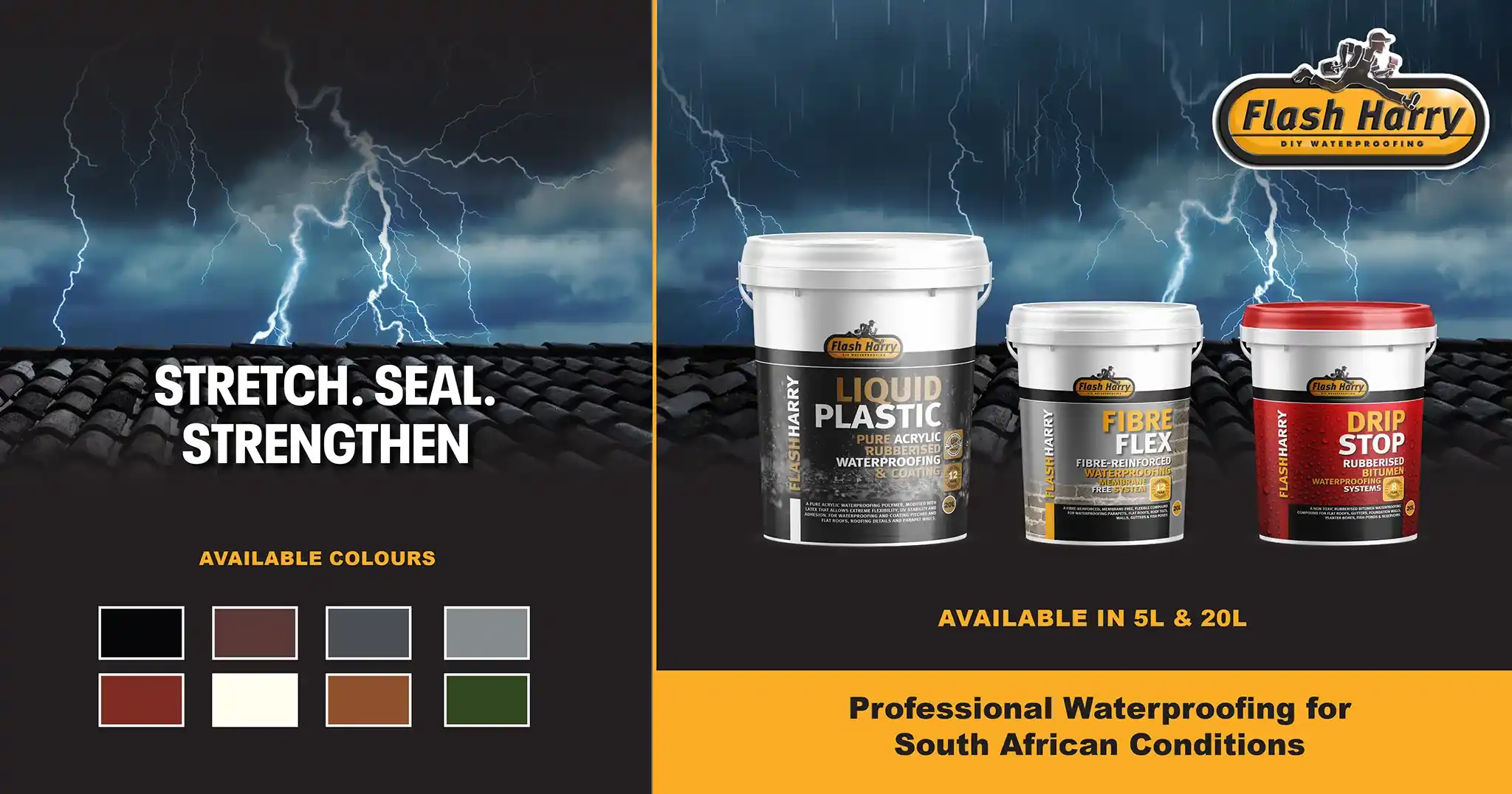
One of the most reliable tools in that system approach is Flash Harry Liquid Plastic Water Barrier – a pure acrylic waterproofing polymer modified with latex, offering 350% stretch, strong UV resistance, and high adhesion when used correctly with a membrane.
For full technical details:
https://flashharry.co.za/products/liquid-plastic-water-barrier
But before talking product – let’s talk problems.
The 5 Most Common Waterproofing Failures (And Why They Happen)
-
Parapet Wall Cracks That Reappear Every Year
You repair them. You repaint. By next season, the crack is back.
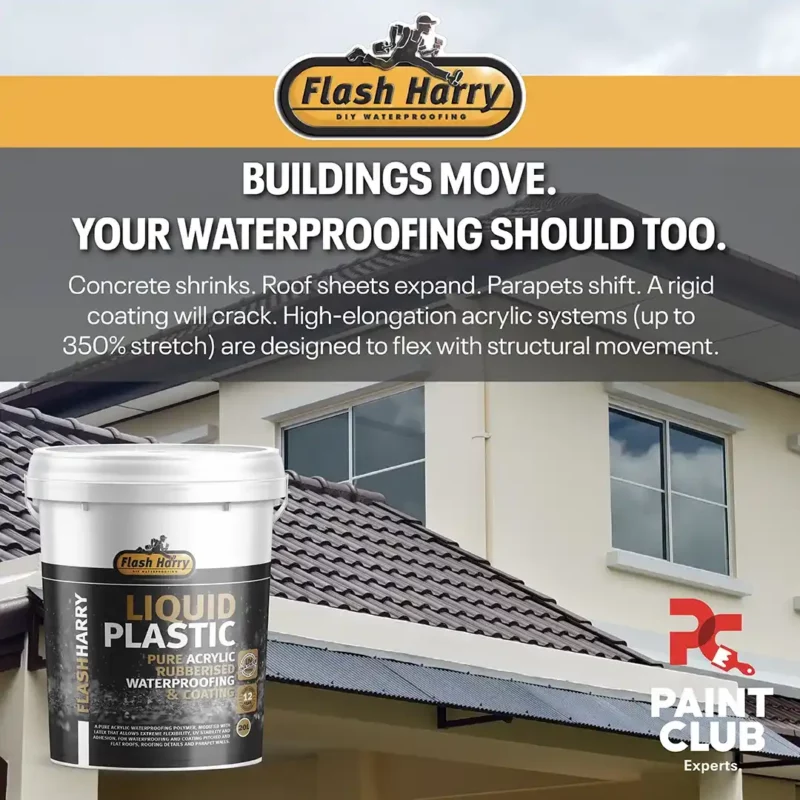
Why?Concrete moves. Buildings settle. Parapets expand and contract under temperature shifts.

A rigid coating simply cannot accommodate structural movement.
A system using a high-elongation pure acrylic polymer (350% stretch) combined with membrane reinforcement allows movement without film rupture.
“Most recurring cracks aren’t structural disasters, they’re movement issues. If the coating can’t stretch, it will fail. It’s that simple.”
~ Riaan du Plessis, National Operations Manager, Flash Harry -
Roof Sheet Lap Leaks After Heavy Rain
Metal roof sheets expand daily under South African heat. The laps shift microscopically.
Common mistake:
Brushing a coating over the joint without reinforcement.Correct system:
• Prime if required
• Saturation coat
• Membrane embedded into wet coating
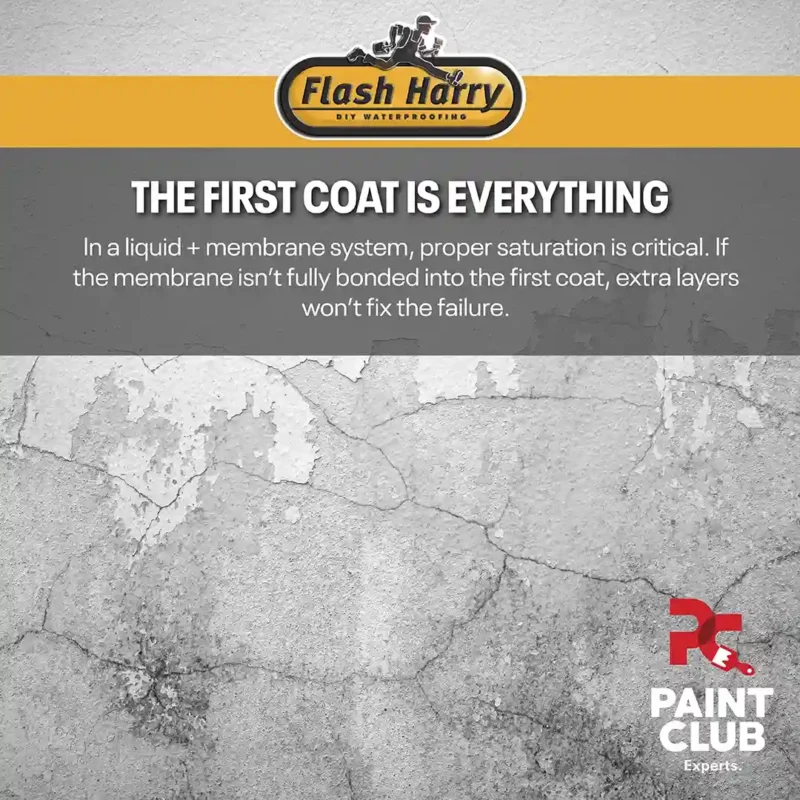
• Properly sealed top coatThe first saturation coat is critical. Adding extra coats later does not compensate for a poorly bonded membrane.
“You can’t build strength on top of weakness. If the membrane isn’t fully saturated into the first coat, no number of extra coats will fix it.”
~ Riaan du Plessis -
Waterproofing Over Bitumen Gone Wrong
This is one of the most common specification errors.
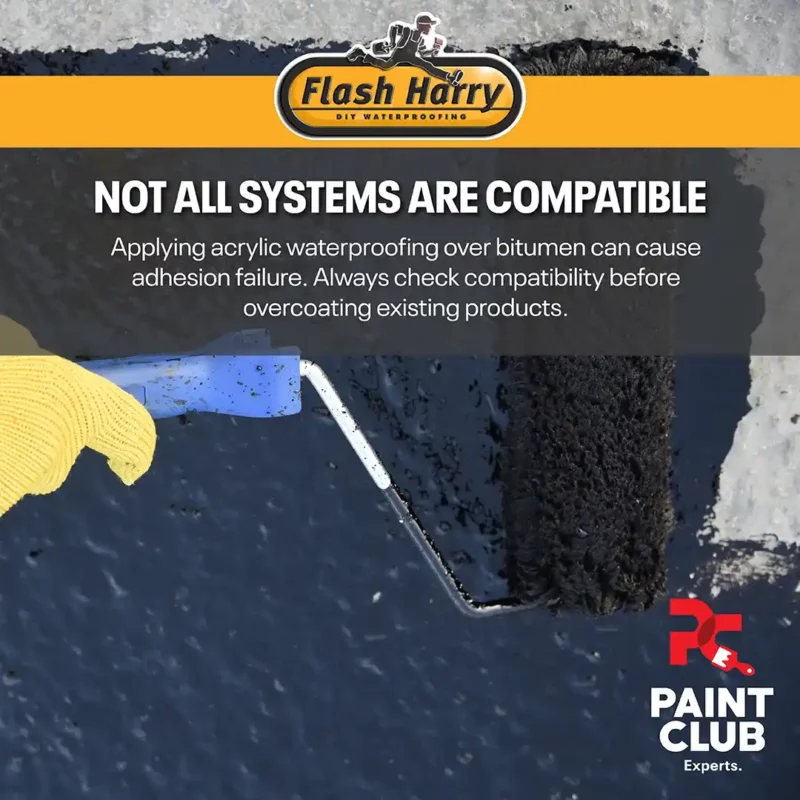
Acrylic waterproofing systems and bitumen systems are often chemically incompatible. Oils from bitumen can migrate, soften the acrylic film, and compromise adhesion.
Flash Harry Liquid Plastic is not recommended for overcoating bitumen systems.
Correct practice:
• Remove unstable bitumen
• Or isolate with a compatible barrier (site-specific testing required)When dealing with unknown existing systems, compatibility testing is essential.
-
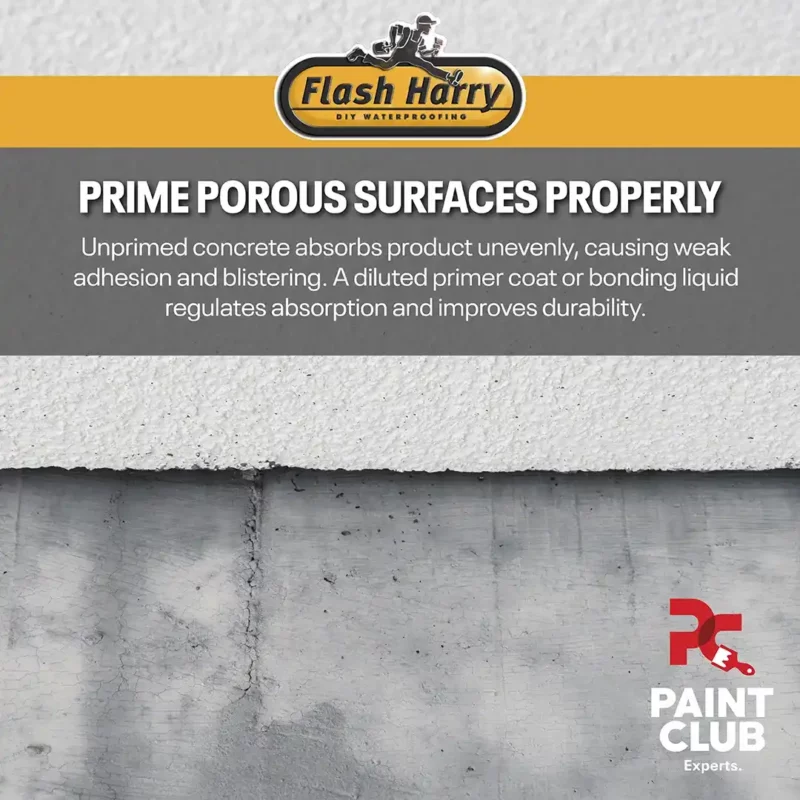
Blistering on Porous Concrete Roofs
Porous substrates can:
• Absorb too much product
• Cause pin-holing
• Reduce adhesionSolution:
Prime with either:• 50% product diluted with water
OR
• A suitable bonding liquidPriming regulates absorption and improves bond strength.
Skipping primer to “save time” is a false economy. -
Misunderstanding “Liquid Rubber”
Many homeowners walk into a store asking for “liquid rubber.”
In reality, most so-called rubberised waterproofing products are acrylic emulsions modified with latex – not rubber in the true vulcanised sense.
They:
• Do not cure into rubber sheets
• Are water-based polymer systems
• Rely on film formation, not rubber chemistryThe real differentiator is:
• Polymer type (pure acrylic vs styrene blends)
• Elongation capacity
• UV resistance
• Solids content
What Makes a Pure Acrylic Waterproofing Polymer Different?
Flash Harry Liquid Plastic uses a pure acrylic polymer base, modified with latex for flexibility.
In South African UV conditions, polymer chemistry matters.
Pure acrylic systems typically offer:
- Better long-term UV resistance
- Greater flexibility retention
- Reduced chalking over time
- Improved colour stabilityLower-cost styrene-acrylic blends can embrittle faster under intense sun exposure.
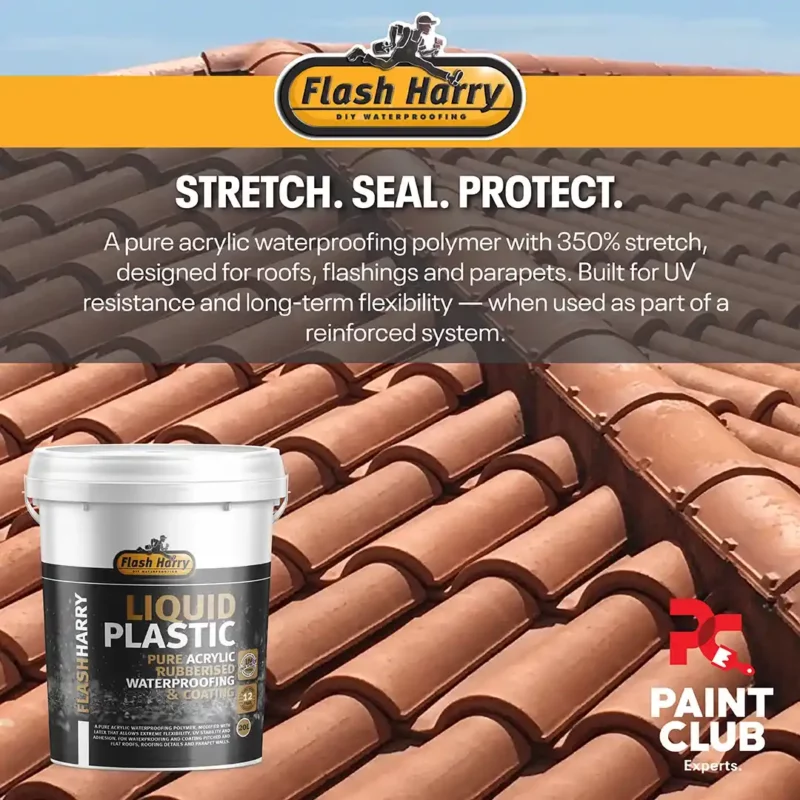
With 350% stretch capability, the Flash Harry Liquid Plastic system accommodates movement in:
- Roof sheets
- Parapet walls
- Flashings
- Concrete slabs
- Expansion-prone substrates
Where Flash Harry Liquid Plastic Works Best
Used correctly with membrane reinforcement, it is suitable for:
- Roof sheets (IBR & corrugated)
- Parapet walls
- Concrete roofs
- Roof penetrations
- Wall-to-roof junctions
- Flashings
Not recommended for:
- Under-tile applications
- Swimming pools
- Fiberglass structures
- Direct application over bitumen
Professional specification includes knowing where not to use a product.
System Thinking: Why Membranes Matter
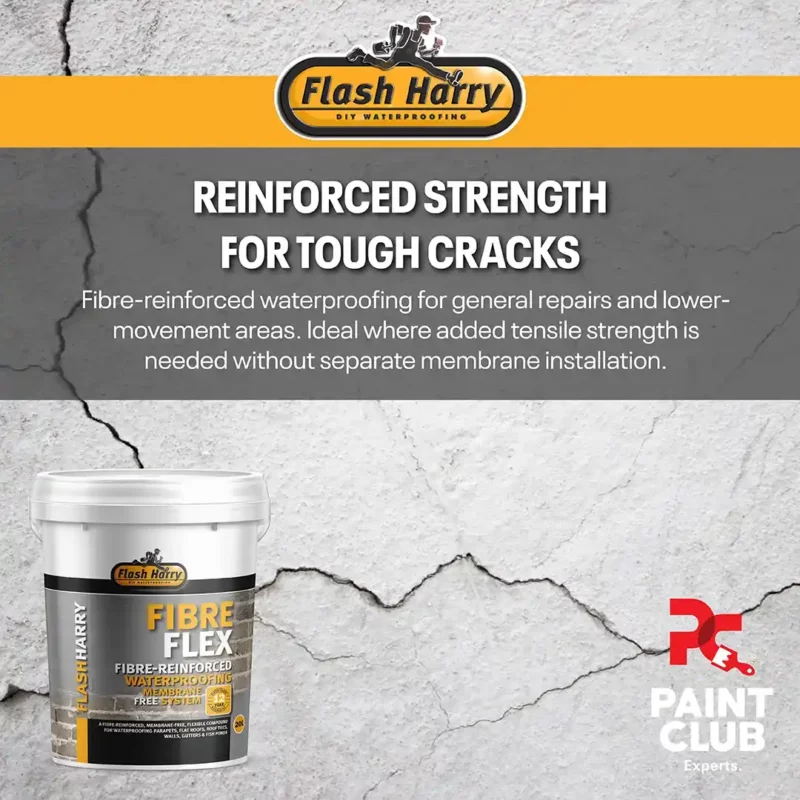
Waterproofing is not paint.
It is a reinforced system.
A membrane:
- Distributes stress
- Increases tensile strength
- Bridges gaps
- Enhances durability
The first coat must fully wet and saturate the membrane. That bond layer determines long-term performance.
Applying many coats over a dry membrane is ineffective.
Comparative Overview – Liquid Plastic vs Rubberised Coatings
Below is a generalised technical comparison between Flash Harry Liquid Plastic and two unnamed competitor systems often marketed as rubberised waterproofing products.
| Technical Feature | Flash Harry Liquid Plastic | Competitor A | Competitor B |
| Polymer Base | Pure acrylic | Styrene-acrylic blend | Acrylic blend |
| Latex Modification | Yes | Yes | Yes |
| Elongation | 350% | 150–250%* | 200–250%* |
| UV Stability | High | Moderate | Moderate |
| Requires Membrane | Yes | Yes | Yes |
| Water Cleanup | Yes | Yes | Yes |
*Typical market range.
The key difference lies in:
- Polymer purity
- Stretch capability
- Long-term UV resilience
South African Climate Realities
Coastal KZN & Eastern Cape
Salt-laden air accelerates corrosion and coating breakdown.
Gauteng & Free State
Rapid temperature shifts demand elasticity.
Western Cape
Winter rain + summer UV cycling tests film durability.
In all three, movement and UV exposure are constant stress factors.
Practical Application Guidelines
- Inspect and clean substrate thoroughly
- Prime porous surfaces
- Avoid bitumen overcoating
- Apply saturation coat generously
- Embed membrane fully
- Allow correct drying times
- Apply final protective coats
Clean up with water while wet.
Why Paint Expert Stores Specify Systems, Not Just Products
At Paint Expert level, waterproofing advice includes:
- Diagnosing the cause of failure
- Identifying substrate type
- Confirming compatibility
- Recommending membrane reinforcement
- Managing client expectations
“Waterproofing fails where shortcuts are taken. The product must match the substrate, and the system must match the movement. There are no shortcuts in long-term waterproofing.”
~ Riaan du Plessis
Solve the Failure, Not Just the Symptom
Flash Harry Liquid Plastic isn’t positioned as a miracle coating. It’s a professional-grade pure acrylic waterproofing polymer designed to be part of a reinforced system.
Its 350% stretch capacity, UV stability, and latex modification make it well suited to South African conditions, when specified and applied correctly.
The difference between a waterproofing patch job and a long-term solution lies in:
- Understanding movement
- Respecting system design
- Using proper membrane reinforcement
- Ensuring compatibility
Waterproofing is not about adding more layers.
It’s about building the right system from the first coat.
FAQs
- What is Flash Harry Liquid Plastic made from?
A pure acrylic waterproofing polymer modified with latex for enhanced flexibility and adhesion. - Is it actually rubber?
No. It is an acrylic polymer system. “Rubberised” is a marketing term. - Why is 350% stretch important?
It allows the coating to accommodate structural movement without cracking. - Can it be used without a membrane?
No. It must be used with membrane reinforcement. - Can it go over bitumen?
No. It is not recommended over bitumen systems. - How do I prime porous concrete?
Dilute 50% with water or use a bonding liquid. - Is it suitable for swimming pools?
No. It is not designed for permanent immersion. - Can I apply it over unknown coatings?
Compatibility testing is strongly recommended. - What surfaces is it best suited for?
Roofs, parapets, walls, flashings, and roof joints. - How do I clean tools?
Clean up with water while wet.
Disclaimer
This article provides general guidance. Always consult the official technical datasheet and conduct site-specific compatibility testing before application.
Click here to download: Flash Harry Data Sheet
